
Mitral Regurgitation (MR) is a serious cardiac problem Due to therapeutic risk most patient remain untreated
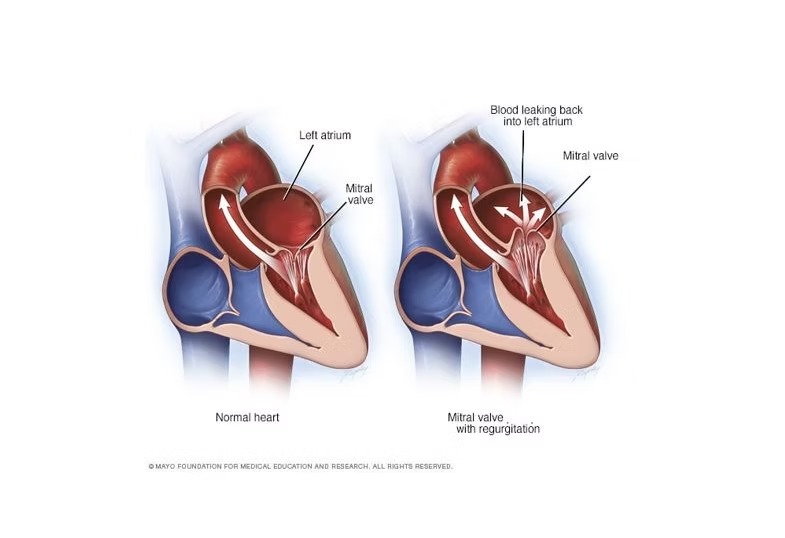
Mitral regurgitation (MR) is a condition in which the valve doesn’t close
properly. Blood leaks back into the left atrium, decreasing blood flow
to the body and causing the left atrial pressure to rise. Due to
therapeutic risk, most patients remain untreated.
For many years, the tricuspid valve was the “forgotten” valve, and not many technological solutions were targeted at it. Similarly to MR, in TR the tricuspid valve does not close properly, leading to blood leaking back into the right atrium. This decreases blood flow into the lungs for re-oxygenation while increasing the blood volume in the venous system, worsening congestion.
Transcatheter Mitral Valve Replacement (TMVR) and Transcatheter Tricuspid Valve Replacement (TTVR) are cardiac intervention methods in which the dysfunctional valve is replaced by a prosthetic valve, using a catheter-based approach. At TruLeaf Medical we are tackling these challenges in an original way.

The transcatheter heart valve replacement market is facing substantial growth due to the incidences of mitral regurgitation worldwide.
With growing demand for transcatheter mitral valves, TruLeaf Medical’s solution comes to answer a huge unmet need.
The transition from very invasive procedures such as surgical heart valve replacement to less invasive procedures govern the interventional cardiology for a few decades now. Following the success of Transaortic valve replacement, a significant demand for transcatheter valve replacement arises. Many challenges are associated with transcatheter valve replacements but one problem stands out as the most fundamental one – anchoring the implant into place. The anchoring problem and the attempts to solve it are the subject of a long-lasting development effort.


Moving from open heart surgery to percutaneous procedures has posed new challenges, not seen before. A paradigm shift is required to solve the mitral problem, in which percutaneous approach is mandatory, and there is no room for trans-apical procedures
Mitral Regurgitation (MR) is a serious cardiac problem Due to therapeutic risk most patient remain untreated
Mitral regurgitation (MR) is a condition in which the valve doesn’t close
properly. Blood leaks back into the left atrium, decreasing blood flow
to the body and causing the left atrial pressure to rise. Due to
therapeutic risk, most patients remain untreated.
For many years, the tricuspid valve was the “forgotten” valve, and not many technological solutions were targeted at it. Similarly to MR, in TR the tricuspid valve does not close properly, leading to blood leaking back into the right atrium. This decreases blood flow into the lungs for re-oxygenation while increasing the blood volume in the venous system, worsening congestion.
Transcatheter Mitral Valve Replacement (TMVR) and Transcatheter Tricuspid Valve Replacement (TTVR) are cardiac intervention methods in which the dysfunctional valve is replaced by a prosthetic valve, using a catheter-based approach. At TruLeaf Medical we are tackling these challenges in an original way.
The transcatheter heart valve replacement market is facing substantial growth due to the incidences of mitral regurgitation worldwide.
With growing demand for transcatheter mitral valves, TruLeaf Medical’s solution comes to answer a huge unmet need.
The transition from very invasive procedures such as surgical heart valve replacement to less invasive procedures govern the interventional cardiology for a few decades now. Following the success of Transaortic valve replacement, a significant demand for transcatheter valve replacement arises. Many challenges are associated with transcatheter valve replacements but one problem stands out as the most fundamental one – anchoring the implant into place. The anchoring problem and the attempts to solve it are the subject of a long-lasting development effort.
Moving from open heart surgery to percutaneous procedures has posed new challenges, not seen before. A paradigm shift is required to solve the mitral problem, in which percutaneous approach is mandatory, and there is no room for trans-apical procedures